History and Culture of Fish and Chips
Fish and chips became a defining British meal through a collision of foodways, migration, and urban change. Salted, deep fried fillets combined with fried potato strips to form an affordable, portable hot meal for growing towns and industrial centres. Early influences came from Sephardi Jewish and Portuguese fried fish traditions, while potatoes arrived in Britain centuries earlier and became a staple by the late 18th century. By the 19th century the meal had crystallised into the familiar battered fish and thick, soft chip served from streetfront counters and takeaway windows.
Early Influences and Street Food

Sephardi Jews from Iberia brought a tradition of frying fish in oil, a practice observed in English ports by the 17th and 18th centuries. Portuguese and Spanish migrants maintained similar methods, often frying whole fish coated in batter or flour, and those techniques merged with British frying practices. Potatoes, first introduced to Britain in the 16th century, were popularised as a working class staple after the 1700s. Fried potato strips appeared in cookery notes and tavern menus by the early 1800s. By mid nineteenth century street vendors in London, Liverpool and other ports sold fried fish and chips to labourers and dockers, establishing the meal’s role as fast, hot nourishment for long shifts.
Rise, Industry, and Ingredients
The leap from vendor stalls to dedicated shops took place in the 1860s and 1870s, with entrepreneurs opening premises that combined frying kettles with counters for takeaway trade. The Industrial Revolution produced dense urban populations and routine shift patterns that kept demand strong. Fish sourcing evolved alongside the industry. Coastal fleets expanded, steam trawlers after 1880 extended range and catch volumes, and ports like Grimsby and Fleetwood became national supply hubs. Potato farming regionalised too, with varieties chosen for texture and frying qualities.
Below is a practical comparison of common fish and potato choices used historically and today, with notes on flavour, typical preparation, and current stock status.
| Species / Variety | Region Most Used | Typical Presentation | Culinary Notes | Conservation Status (UK focus) |
|---|---|---|---|---|
| Atlantic cod | East and North coasts | Battered fillet | Mild flavour, flaky, ideal for batter frying | Stocks reduced in North Sea; regulated quotas |
| Haddock | Scotland, North | Battered or smoked | Slightly sweeter, firm flakes; popular in northern chippies | Improved management but local variability |
| Pollack | West coasts | Battered | Lean, affordable cod alternative | Generally sustainable in several areas |
| Plaice | Southern and Eastern coasts | Battered or grilled | Delicate flesh, thin fillet | Quotas in place; smaller seasonal supply |
| Maris Piper potato | Nationwide | Thick-cut chip | Floury, retains crisp outside and soft inside | Widely grown; favoured for frying |
| King Edward potato | England & Wales | Chunky chips | Creamy texture, traditional preference | Common cultivar with consistent yields |
| Jersey Royal | South coast/Isles | Thinner chips or new potato sides | Waxy, seasonal speciality | Seasonal and limited volume |
Supply chains now involve cold chain logistics, factory processing for some operators, and certification schemes. Seafood auctions, quota allocations and retailer contracts shape which species are used on any given day.
Regional Styles, Social Role, and Wartime
Local tradition shapes how the meal appears across Britain. Northern England and Scotland favour haddock, often paired with mushy peas and thick-cut chips. London chippies historically developed a cockney identity, emphasising takeaway convenience, salt and vinegar seasoning, and quick service. Coastal areas such as Cornwall and Wales incorporate locally landed species and sometimes lighter fry techniques. Beyond flavour, the chippy has functioned as a community hub. It is a place for shift workers, families and older residents to exchange news, gather warmth and buy affordable food. Religious practices and class distinctions influenced trade patterns and employment; Jewish-run shops were prominent in certain port towns during the 19th and early 20th centuries.
Wartime shaped access and taste. World War I increased demand from armed forces and munitions workers. Rationing in World War II placed constraints on fats and some cuts of fish, yet the government recognised the meal’s morale value and permitted extra fish rations at times. Postwar recovery saw shifts toward frozen supply and increased retail supermarket influence.
Innovation, Regulation, and Business
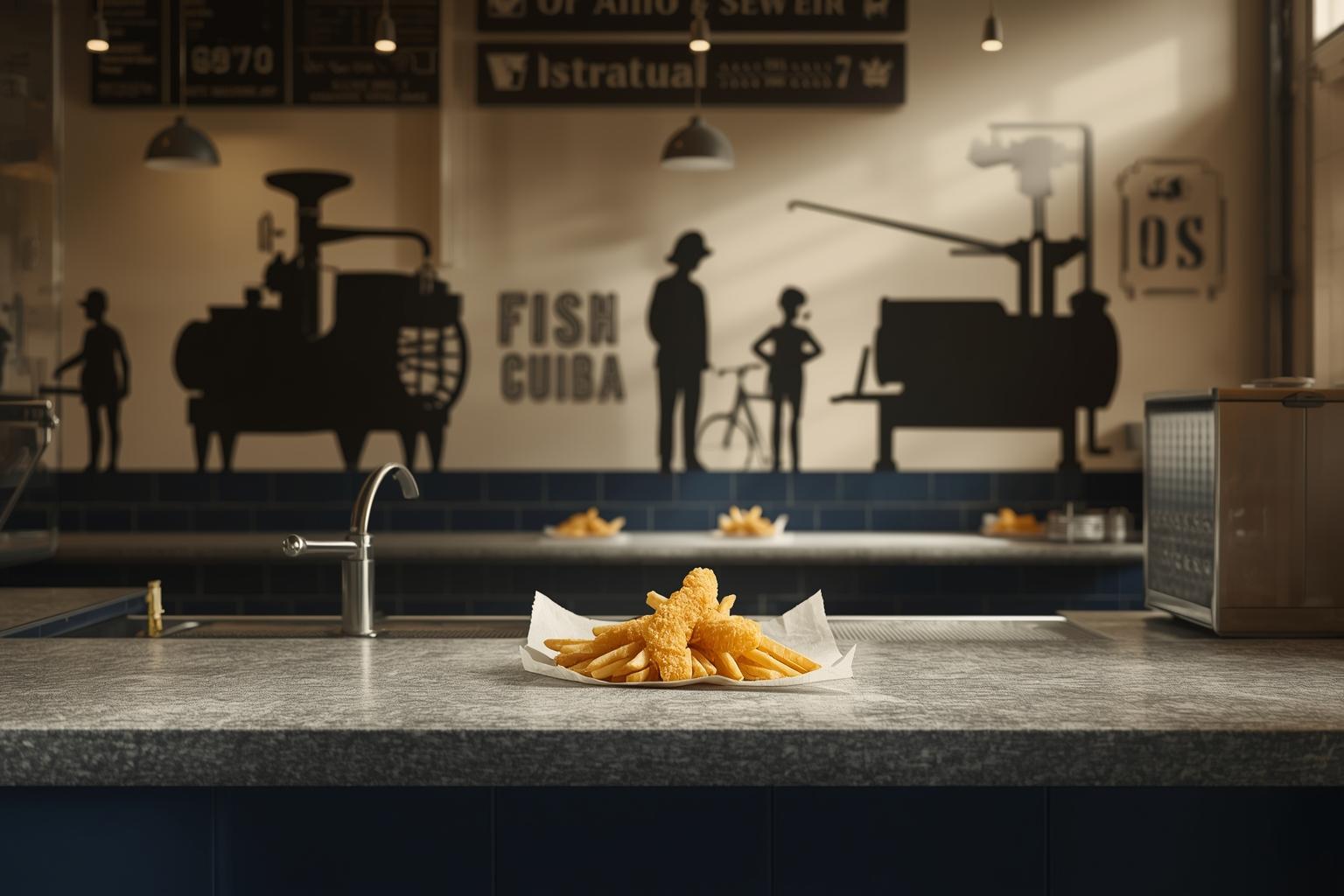
Culinary evolution continued with batter recipes that balance crispness and lightness, and with frying oils that improved shelf life and health awareness. Equipment moved from open kettles to temperature-controlled fryers, and packaging migrated from newspaper wrappings to greaseproof paper and recyclable cartons to meet hygiene and litter controls. Food hygiene legislation from the early 20th century tightened over time, with licensing, inspection and training required for commercial kitchens. Business models range from single-owner neighbourhood shops to regional chains and branded operators. Profitability depends on catch prices, fuel and energy costs, labour and local rent, and fluctuating consumer demand. Trade associations provide benchmarking, training and lobbying on quota and sustainability matters.
Modern Trends, Conservation, and Future
Recent decades introduced higher end “gastro” chippies that emphasise provenance, craft batter and paired beers. Sustainable sourcing gained prominence with certification schemes and alternative species promoted to relieve pressure on depleted stocks. Plant-based batter and fish substitutes are emerging to meet dietary shifts. Technology has changed ordering and delivery behavior with online platforms extending service hours and reach. Community initiatives support apprenticeships to pass on frying skills and to protect historic shops. Policy decisions on fisheries management, energy costs and urban planning will shape the sector. Consumer preference changes and environmental constraints will drive innovation in sourcing, equipment and business models while preserving the core identity that made the meal an enduring national staple.